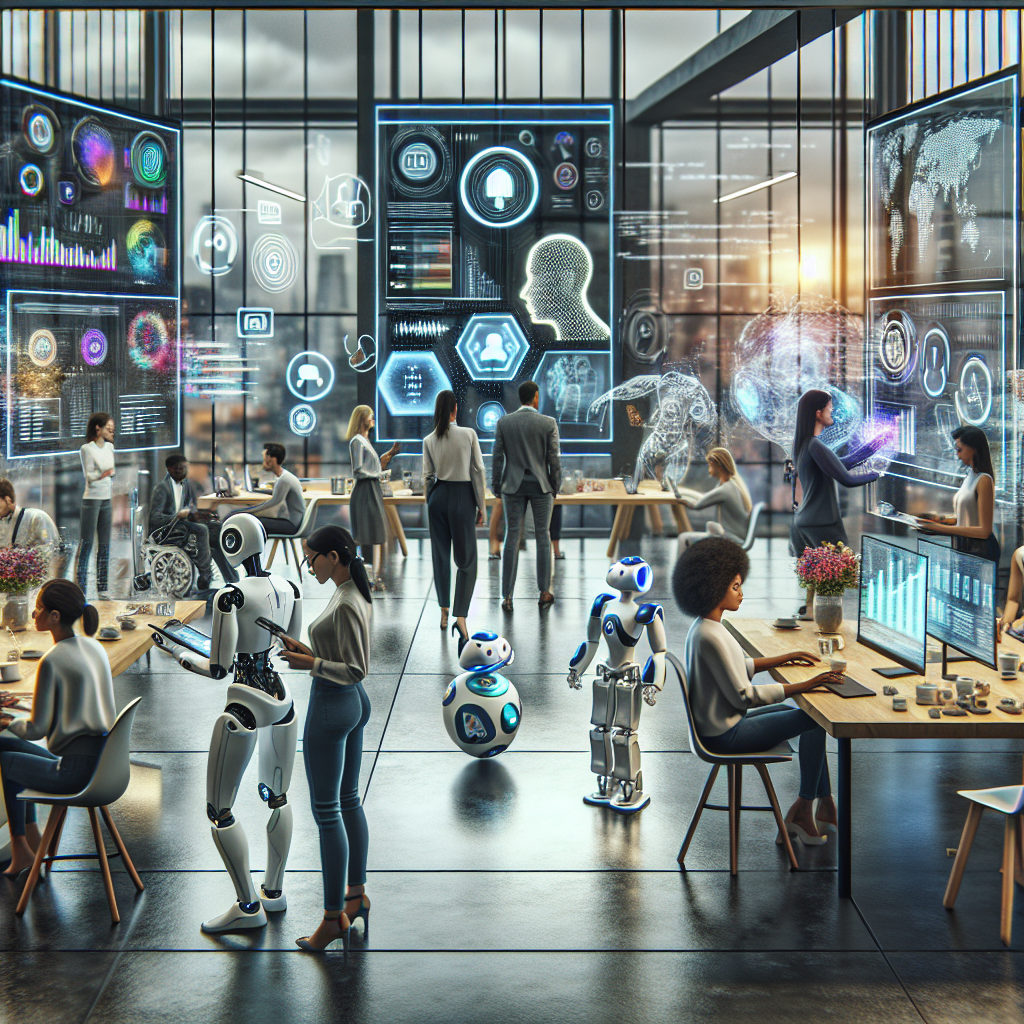
Building a digital product empire from scratch might sound daunting, but with the rise of artificial intelligence (AI), this task has become more accessible than ever.
The magic of AI lies in its ability to sift through vast amounts of data, identify patterns, and automate complex processes, all of which are critical for deploying a successful digital product.
As the digital landscape continues to evolve, understanding how to leverage AI can exponentially boost your ability to create, manage, and scale digital products effectively.
The starting point of any digital product journey is often an idea.
Great ideas are the backbone of any successful venture, and brainstorming is where AI can provide its first major boost.
Traditionally, this would require a team of individuals to throw concepts around, refine them, and then eventually settle on something feasible.
Enter AI-driven tools that can automate the brainstorming process through natural language processing.
These tools can analyze current market trends, explore large data sets of customer feedback, and generate ideas that are both innovative and likely to resonate with your target audience.
Once you have an idea, the next step is to validate it.
AI plays a critical role here as well.
Machine learning algorithms can analyze market data and predict the potential success of your idea, giving you a higher chance of striking gold.
AI can even simulate various market scenarios and help you refine your product to better fit your audience's needs.
With a validated idea in hand, the design phase commences.
AI can assist graphic designers through tools that offer suggestions for layouts, color schemes, and even entire design templates.
This not only speeds up the design process but also ensures that your product adheres to current design standards and trends.
Additionally, AI-driven UX/UI design tools can analyze user interactions to offer real-time insights into optimizing the user experience, thus designing a product that is not only visually appealing but user-friendly as well.
The next important step is the actual development of the product.
AI automation tools can simplify coding by auto-generating code snippets, and identifying errors, and even suggesting optimal code structures.
Moreover, AI can streamline the development lifecycle by predicting potential roadblocks and suggesting workflows that enhance productivity.
For teams that consist of both technical and non-technical members, AI can offer a bridge, providing insights and explanations that demystify complex technical requirements, ensuring everyone is aligned with the product's goals and capabilities.
Once the product is built, marketing becomes the primary focus.
Traditional marketing strategies are increasingly being augmented with AI capabilities that analyze consumer behavior, optimize advertising spend, and personalize customer outreach.
AI-driven customer segmentation can reveal untapped markets and provide personalized content that resonates with each segment.
This kind of targeted marketing ensures that your product reaches the right audience at the right time, maximizing your ROI.
Customer service is another domain where AI is revolutionizing processes.
Chatbots and virtual assistants equipped with natural language processing can handle routine inquiries, freeing up human agents for more complex tasks.
They provide 24/7 support, enhancing customer satisfaction and ensuring any issues with the digital product are addressed promptly.
Over time, these chatbots learn from interactions, improving their capabilities and providing even better service.
Feedback loops are essential for the growth and refinement of any product.
AI systems can analyze customer reviews and social media interactions to provide actionable insights.
This continual assessment helps in staying ahead of competitors and responding swiftly to customer needs.
Sentiment analysis, powered by AI, can detect changing customer attitudes, alerting you to potential issues before they become major problems.
Incorporating this feedback into product updates ensures continuous improvement and helps in maintaining a loyal customer base.
Scaling a digital product empire involves expanding either the range or reach of your products.
This is another area where AI demonstrates its prowess.
By analyzing successful features in your current products, AI can suggest potential areas for either new product development or enhancement of existing products that have shown high customer satisfaction.
In logistics, predictive analytics powered by AI can streamline supply chains and predict demand surges, ensuring that operations are smooth as you cater to a larger audience.
Security is an omnipresent concern in the digital world, and AI offers a robust defense mechanism against cyber threats.
AI systems can detect unusual patterns in real-time, flagging potential security breaches before they cause significant harm.
As digital threats continue to evolve, so does AI, ensuring that your digital infrastructure remains protected.
A critical yet often overlooked aspect of managing a digital product empire is ensuring that your team remains dynamic and adaptable.
AI can be a part of this cultural change by automating tedious tasks, allowing human resources to focus on creativity and problem-solving.
Furthermore, AI-based tools can evaluate employee performance, suggest training programs, and even predict career paths, ensuring that your team continually evolves alongside your product.
As your empire grows, the need for sustainable practices becomes more glaring.
AI offers solutions to ensure that your product's lifecycle is environmentally conscious.
From optimizing energy consumption to suggesting sustainable supply chain practices, AI is at the forefront of green technology.
While AI provides numerous benefits, it also requires a responsible approach.
Ethical considerations must be taken into account, such as data privacy and bias in AI algorithms.
It is essential to foster transparency concerning how AI tools are used, especially how they handle consumer data.
In conclusion, AI is a powerful ally in the art of building a digital product empire from scratch.
Its ability to automate, predict, personalize, and secure processes redefines what is possible in the digital realm.
Whether you are at the beginning stages of an idea or looking to scale a successful product, AI provides the tools and insights needed at every stage of your journey.
Embracing AI is not just about staying relevant but about carving out new pathways in the digital future.
With careful implementation and ethical considerations, AI can be the cornerstone upon which your digital product empire stands strong and resilient.